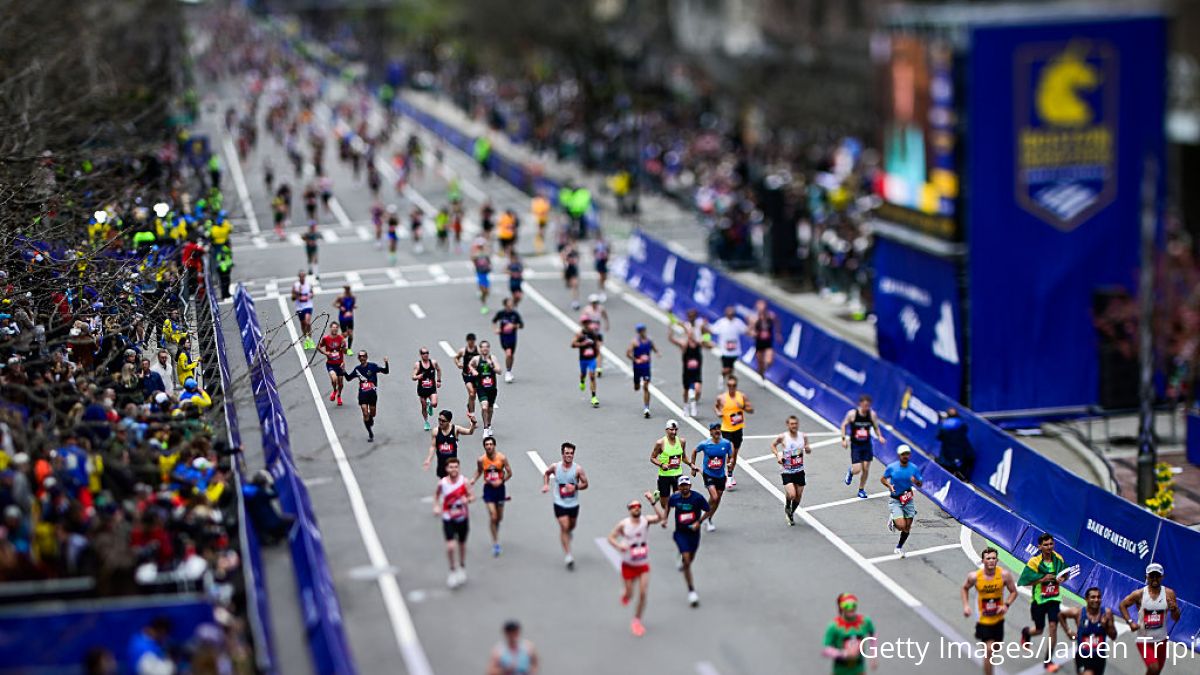
Tuesday, the Boston Athletics Association (BAA) released the cut-off time for Boston Marathon Qualifiers, which was 5 minutes and 17 seconds faster than the existing Boston Age Group Qualifying Standards.
Of course, comments and the public weren't too positive and I get it if you were one of those 8,019 people who were cut despite hitting your BQ. It must sting and I can sympathize with those people.
However, some are calling for change - and that’s where my line is drawn.
- Tigst Assefa Runs Gritty Berlin Marathon Finish Despite Ruptured Achilles
- A Look At The FloTrack College XC Rankings
- 2026 Bank of America Chicago Marathon Entries
I'm all for making stricter standards that would naturally be more clear - but we have to take a step back and understand why the BAA’s current system works. The BAA is trying to limit participation to 30,000 runners, but also trying to fill the race. Having a standard slower than the actual cut-line allows for the BAA to guarantee that end result by encouraging applications.
Maybe a change is as simple as renaming the Boston Qualifying “Standards” to Boston Qualifying “Guidelines” or just making the standard stricter in general so that 8,000 people aren't on the cut list.
But again - I think these solutions would address non-issues. When you run a Boston Qualifier - you know that you’ll likely need to be 5 minutes under the qualification standard. This is a well-known understanding in the running community.
The Boston Marathon is the most prestigious marathon in the United States, if not the world - so when it comes to the ongoing conversation of increasing inclusivity by increasing the number of participants (or even making Boston a multi-day event) - I’m not on board.
It should be hard to qualify for Boston.
That’s part of what makes the Boston Marathon special. It means something to be there because it is difficult to get there.
By increasing the field size, you risk taking away from the allure of qualifying in the first place.
In my age group the qualifying standard plus the cut-down means it takes a 2:49 to qualify. That’s fast and hard, but it’s supposed to be hard and I think that’s okay.
But I want to be clear - I think there are other ways that we can increase inclusivity when it comes to the Boston Marathon outside of the ever-increasing BQ standards.
Currently, there is a lottery for those that hit age-group qualifying standards but miss the final cut-off. 1000 runners of the 8019 cut will earn bibs through this process.
But I’m a proponent for expanding on that process and making it more dynamic.
That’s where I think Boston can learn something from a very different race: the Western States 100 Mile Endurance Run.
The Western States is a 100-mile endurance race from Olympic Valley to Auburn, California. It's one of the most prestigious ultramarathons in the world, and getting into the race is incredibly difficult.
But the lottery system is what Boston can mimic.
For the average-joe runner like you and I, the process starts by completing one of Western States' designated qualifying races. Once you've done that, you can enter the lottery.
If you don't get selected and qualify again the following year, your number of lottery tickets doubles. Continue qualifying year after year and your number of tickets continues to double, progressively improving your chances of eventually getting into the race. By year five, you would have 16 tickets compared to the one ticket that a first time qualifier would have.
That's the part of the system I think Boston could borrow.
Obviously, the Boston Marathon is a much larger event, and the logistics would be completely different. But the underlying idea has merit: reward people who continue meeting a difficult standard, even if they repeatedly miss out on an entry.
Boston shouldn't become easier simply for the sake of getting more people into the race. The difficulty of qualifying is part of what makes Boston special.
At the same time, there should be a way to recognize the runner who spends five, six or seven years consistently chasing the standard and coming up just short of actually getting onto the starting line.
A system inspired by Western States could accomplish both.
FloTrack Archived Footage
Video footage from each event will be archived and stored in a video library for FloTrack subscribers to watch for the duration of their subscriptions.
Join The Track & Field Conversation On Social
- Follow us on Twitter @FloTrack
- Follow us on Instagram @flotrack
- Follow us on TikTok @flotracktv
- Watch us on YouTube
- Like us on Facebook