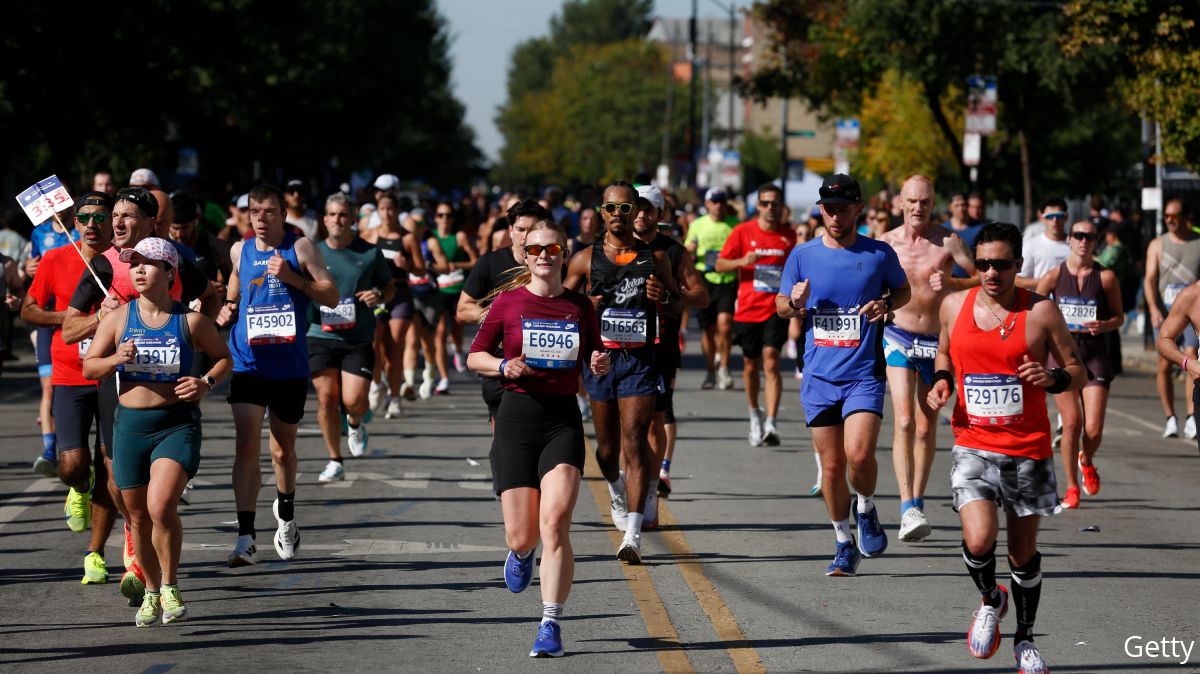
With the Chicago Marathon quickly approaching, there’s no better time to talk about the growing popularity of marathons and what some are calling the second coming of the running boom.
The term “running boom” is often associated with the 1970s, when athletes like Steve Prefontaine helped propel distance running into the American mainstream and participation in the sport began to surge. More than 50 years later, running is experiencing another period of explosive growth and marathons have played a major role in making that possible.
From bucket-list goals to social media, charity fundraising to the rise of the Abbott World Marathon Majors, the marathon has evolved beyond a race. It has become a cultural event, a personal milestone and, for many, a gateway into the sport.
Here are some of the ways marathons have contributed to the second coming of the running boom.
- Tigst Assefa Runs Gritty Berlin Marathon Finish Despite Ruptured Achilles
- 2026 Chicago Marathon Elite Entries
Bucket Lists and Personal Achievements
For many runners, completing a marathon is the ultimate personal goal.
The 26.2 mile distance has a unique cultural significance. Even people who don't consider themselves “runners” often recognize the marathon as a major accomplishment, making it an attractive bucket list challenge.
That has helped bring new people into the sport. Someone may start running because they want to complete a marathon, but along the way, they become part of a larger running community such as signing up for shorter races, joining a run club or simply making running a regular part of their life.
The marathon isn't just a race at the end of that journey. For many, it's the reason the journey begins.
Running Has Never Been More Accessible
Running has always been one of the most accessible sports in the world. You don't need a team, a field or expensive equipment to participate. But technology has made the sport even easier to access.
Apps like Strava and Garmin Connect have transformed running into a social experience, allowing athletes to track their progress, share workouts and connect with runners around the world.
Training plans, online communities and virtual challenges have also made the process of preparing for a marathon more approachable. You no longer need to be an elite athlete or have access to a formal running club to understand how to train for 26.2 miles.
The marathon has become a challenge that feels increasingly achievable for the everyday athlete.
Running With a Purpose
Marathons have also become one of the biggest platforms for charitable fundraising.
Many major races partner with charities and offer guaranteed entries to runners who commit to raising money for a cause. For some participants, the marathon isn't simply about crossing the finish line, it's about raising thousands of dollars, honoring someone they love or using their platform to make a difference.
That gives the marathon another layer of meaning.
A runner can be competing against the clock while simultaneously running for something much bigger than themselves. That combination of personal achievement and community impact has helped expand the marathon's appeal far beyond traditional competitive running.
The Rise of the Major Marathon Circuit
The growth of the World Marathon Majors has also transformed marathon running into a global pursuit.
Races such as Chicago, Boston, New York, London, Berlin, Tokyo and Sydney have become destinations for runners around the world. Completing one is an accomplishment. Completing all of them has become a bucket-list achievement of its own.
The Six Star Medal has added another layer to that pursuit, turning individual races into part of a larger journey.
That prestige creates a collecting mentality similar to what exists in other sports. Runners aren't just signing up for a marathon; they're chasing a personal best, a qualifying time, a major championship experience or the next medal in their collection.
And because these races take place in some of the world's biggest cities, the experience extends well beyond the course.
Marathons Have Become Cultural Events
Perhaps the biggest change is how visible marathons have become.
Major marathons now attract enormous fields, record numbers of applicants and global audiences. Getting into some of the world's most prestigious races has become an achievement in itself, with demand sometimes far exceeding the number of available spots.
That demand has pushed marathons into the center of mainstream sports and tourism.
Cities embrace these races because they bring in runners, spectators and visitors from around the world. Businesses benefit. Hotels fill up. Entire neighborhoods become part of the event.
The marathon has become more than two hours of elite racing or several hours of recreational running. It's a citywide celebration.
And that's important for the running boom because visibility creates interest. Someone who watches the Chicago Marathon on television, sees a friend post about finishing it on Instagram or watches thousands of runners take over the streets may not consider themselves a runner yet; but they may start wondering, Could I do that?
The Marathon Is Bigger Than the Race
The running boom of the 1970s helped establish distance running as a major part of American sports culture. Today's resurgence looks different.
Elite athletes and record-breaking performances still matter, but the modern running boom is also being fueled by everyday runners. Marathons have given those runners a goal, a community and a reason to participate.
The sport's accessibility has always been one of its greatest strengths. Now, technology, social media, charity, major marathon circuits and the cultural significance of the 26.2-mile distance have amplified that accessibility.
So as Chicago approaches, it's worth looking beyond the elite race and asking what the marathon represents.
Maybe the second coming of the running boom isn't being driven by one athlete or one race.
Maybe it's being driven by millions of people deciding they want to see what they're capable of. One mile, one race and eventually one marathon at a time.
FloTrack Archived Footage
Video footage from each event will be archived and stored in a video library for FloTrack subscribers to watch for the duration of their subscriptions.
Join The Track & Field Conversation On Social
- Follow us on Twitter @FloTrack
- Follow us on Instagram @flotrack
- Follow us on TikTok @flotracktv
- Watch us on YouTube
- Like us on Facebook